In 1984, the first deposit can was returned in Sweden. But how did the deposit system begin? What challenges were faced in the early days? Here are the answers.
Returpack was founded in 1982, but it wasn’t until 1984 that the deposit system properly got under way. There was a lot to think about before the launch – not least the development of deposit machines and making sure the logistics worked.
Returpack’s first CEO lived in Malmö, and an office was established there. Another office was opened in Stockholm to stay close to breweries and authorities. In the early years, the Stockholm office was located on an industrial estate in Spånga.
For Returpack, the initial focus was on getting to grips with all the practical details, so various working groups were set up to look at aspects such as how logistics and finance could be managed.
Returpack received a government loan to help get the deposit system up and running. In the end, the full amount wasn’t needed and the loan was repaid within a few years. Before long, Returpack was financially self-sufficient.
Returpack’s revenue originates from various sources – and incurs various types of costs. In this respect, the company is no different from any other company, but the actual business model is different. The deposit is the driving force behind the system, and Returpack’s role is to ensure that it follows the packaging through the system and is then refunded to the customer.

For the first five years, we were the only company in Northern Europe working with aluminium cans. Finland and Norway hadn’t adopted them yet, and trade with Eastern Europe was still closed. In Denmark, drinks were almost exclusively sold in glass bottles, so imported cans weren’t much of an issue in the early days.
Returpack went on a study trip to the USA. Some states already had deposit systems in place, but these were considered too costly, as each manufacturer was responsible for taking back its own cans. Instead, Returpack wanted a shared system where all returnable cans could be collected and melted down together, regardless of who had produced them.

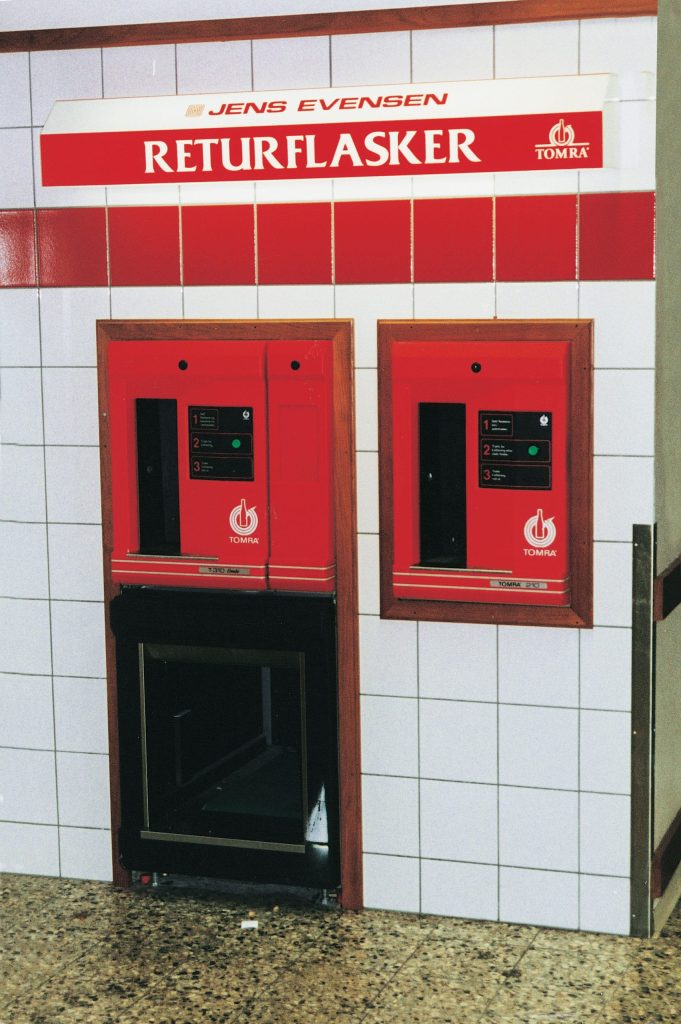
Tomra of Norway was the world’s first company to introduce deposit machines for returnable glass bottles. The company was founded by Petter and Tore Planke in 1972. By the early 1980s, Tomra was already operating in Sweden, supplying deposit machines to Systembolaget. At the time, there was a deposit on glass bottles for beer and wine, and consumers had to return them to Systembolaget. This system remained in place until 1999. For political reasons, however, aluminium cans couldn’t be returned there – the National Board of Health and Welfare didn’t want to encourage people to visit Systembolaget more frequently, as this might increase alcohol sales. Moreover, convenience stores were also generally more accessible and better suited to handling returns.
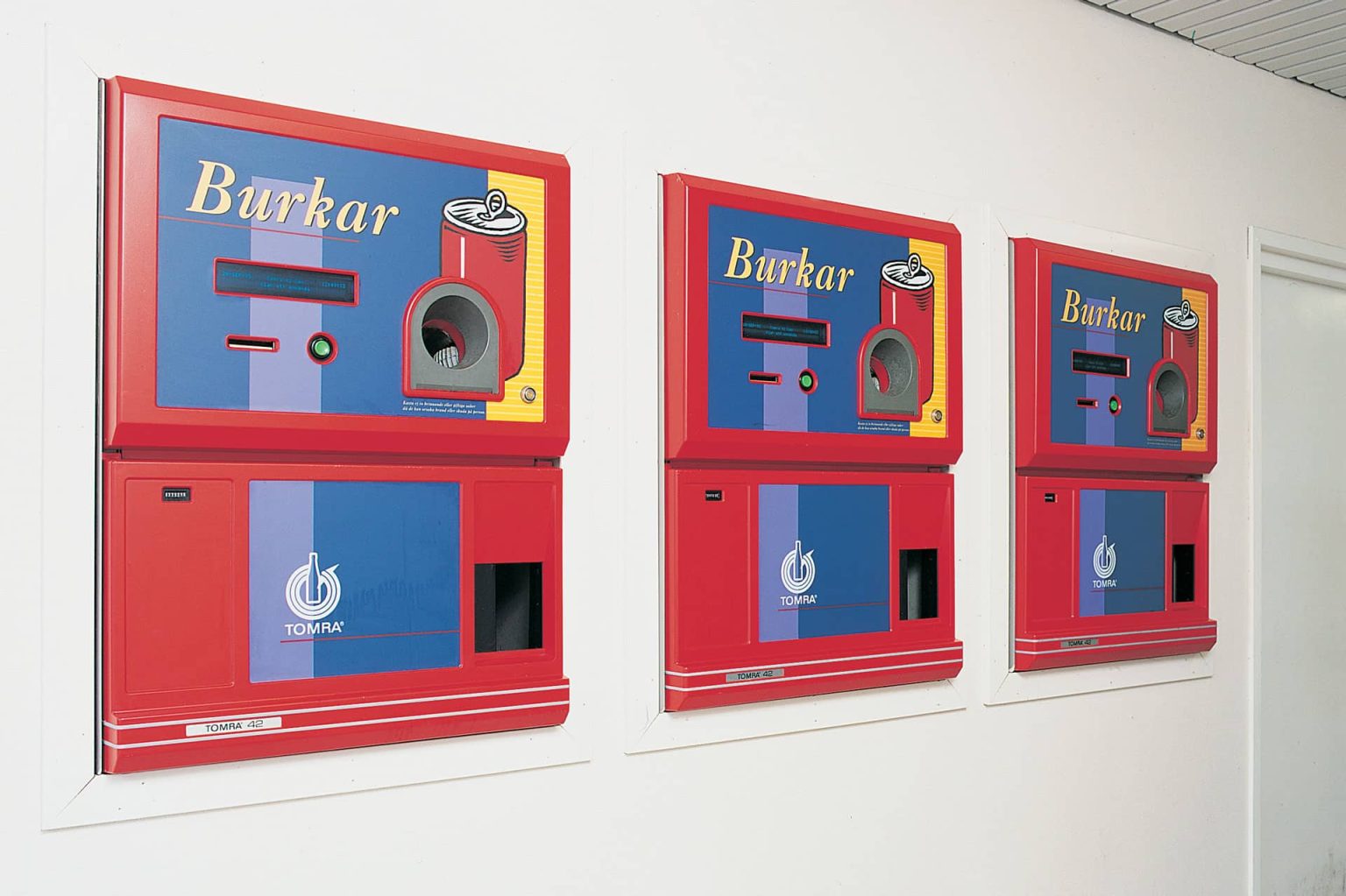
The Swedish deposit system for aluminium cans opened up a new market for Tomra. Swedish shops needed reliable deposit machines that could both sort aluminium and flatten the cans. This was new to both shops and suppliers. Tomra was under pressure to develop such a machine quickly, as the deposit system was due to go live the following year.
All manufacturers interested in supplying deposit machines were invited to take part in trials on Gotland, where the machines would be tested under real conditions.
The can manufacturer PLM also developed a machine; their aim wasn’t really to enter the market, but to make sure at least one viable option would be available if others failed. Tomra’s first machine, the Can-Can, was shipped to Gotland to compete against the other suppliers. Six different machines participated in the trial, although not all of them were fully developed. One machine accepted all types of aluminium, not just drinks cans. In the end, three machines were approved – from Tomra, PLM and the newly established company Daro from northern Sweden.
Tomra had a clear advantage, having worked with deposit machines for a decade. Even so, all three machines had major problems, and fortunately the launch of the deposit system was delayed by a few months.
The original plan had been for Returpack to buy 3,600 machines and install them in the country’s largest shops, but Ica, Dagab and Coop didn’t agree to this. The shops wanted to own the machines themselves. They also wanted to choose their own suppliers.
In terms of quality, none of the machines was perfect, but what really mattered in the end was servicing. When a machine broke down – which happened fairly often – shops needed to be able to get help quickly. Tomra already had a nationwide service network in place, and over time this allowed them to become the dominant supplier.
Early machines were very simple. They used photocells, scales to detect whether a can was full or empty, and metal detectors to identify whether it was made of aluminium. A compactor then flattened the can. It wasn’t until a few years later that EAN codes were introduced on cans and machines were required to read barcodes. This significantly improved machine performance and reliability.
Tomra has faced competition from time to time, but others have found it difficult to enter the market as nationwide service capability and scale are essential.
Even during the early tests on Gotland, there was debate about how best to flatten the cans.
PLM’s machine compressed cans into a puck shape, while Tomra’s flattened them lengthways and punched small holes in them.
The relative merits of each method have been a topic of debate for years. PLM’s hockey puck approach allowed around 500 cans to fit in each bag, while Tomra’s system allowed for about 350 cans per bag. However, when it came to recycling and removing paint, Tomra’s flattened cans proved easier to clean and process.

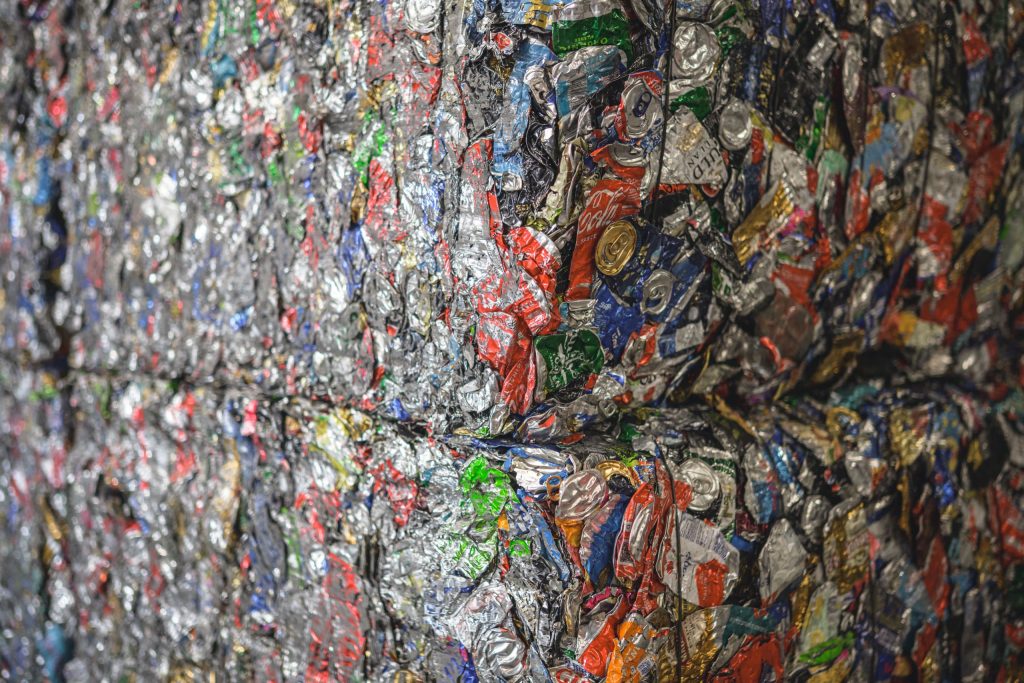
Collecting the cans was only part of the process – they also needed to be recycled properly. The contract was awarded to Gränges Aluminium in Finspång. All deposit cans were sent there to be melted down, and the aluminium was reused to produce new cans.
In the early days, PLM was the only can manufacturer in Sweden. No other company was focusing on aluminium cans – all competitors were based in Europe. The new factory had substantial capacity and was highly competitive. It could produce around 900 million cans per year, of which 600 million were needed for the domestic market. PLM later expanded still further by acquiring additional factories. Although Sweden’s neighbouring countries weren’t yet using aluminium cans, many of the cans produced were exported.
Some cans were sold to Carlsberg in Denmark. They filled them with beer and then exported them to other countries. In Denmark, beer was traditionally sold in glass bottles, and it took time for cans to be accepted.
Cans were mainly used for beer at this stage, but the popularity of soft drinks in aluminium cans would soon grow rapidly.
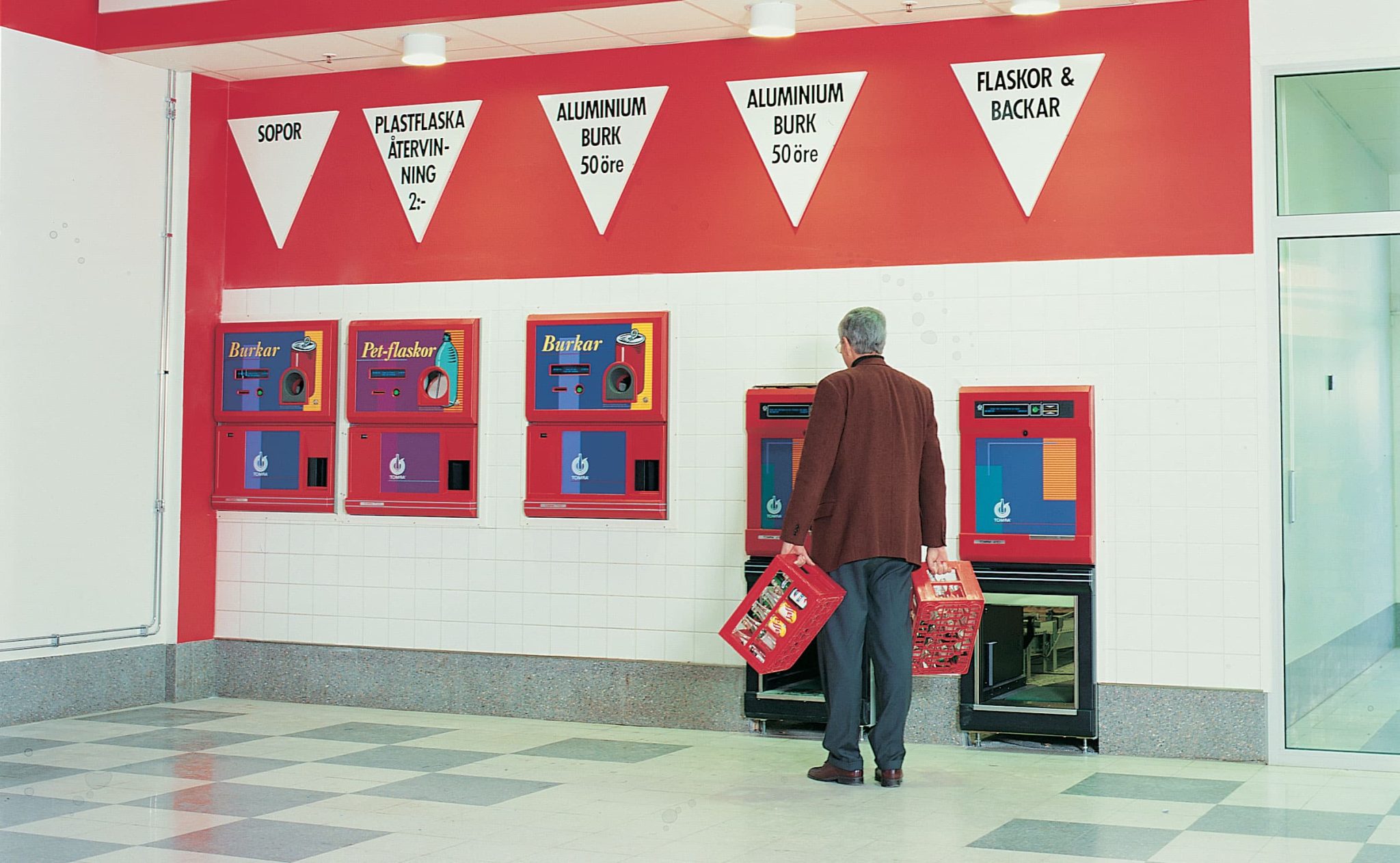
The deposit system officially went live on 21 March 1984. Machines were installed in shops, and returned cans began making their way back to the breweries. Even so, many retailers remained hesitant about processing the cans.
Shops were designed for selling goods to customers, not for customers to return items. The system introduced a reverse flow that didn’t sit comfortably at first. Some shops counted cans by hand, which took time. And because the machines were fairly basic, shop staff often had to step away to deal with faults.
Some were concerned that returned packaging would cause unpleasant odours in their shops. This problem was at its worst during the early years, but as shops were refurbished and reorganised, deposit stations could usually be placed in separate sections.
It was important to build a system that encouraged retailers to invest in deposit machines. Returpack used several incentives, such as financial support for purchasing machines and compensation for processing returned cans.
The original idea had been for Returpack to own the machines, which would have ensured consistent quality across the network. But retailers didn’t agree with this. For them, it was a matter of principle – they didn’t want anyone else owning part of their shop environment.
Some shops either couldn’t afford a machine or chose not to invest, and staff in those cases had to count returns manually. Returpack ran various campaigns to reduce this manual processing, such as buying deposit machines and then either giving them away or offering them at reduced prices.
Over time, most shops realised that participating in the deposit system and having reliable machines gave them a competitive advantage. Customers often preferred shops where returning deposit packaging was quick and easy.
The main problem with the machines was reliability. They frequently jammed and caused frustration, so it was important that shops were properly compensated for the extra work involved. Negotiations took place within Returpack’s board, and studies were conducted to determine fair levels of compensation.
Some shops sold a lot of cans and received the deposits, but there were no guarantees that the same number of empty cans would then be returned to the shop. Customers couldn’t be expected to go back to the same shop to redeem their deposits.
Alongside compensation, it was also vital to make sure that logistics ran smoothly – ensuring that trucks arrived at shops and made collections at the right time, for instance, so that no bags were left piling up. At that time, many shops were small and short on space.
Despite the extra hassle, many retailers had faith in aluminium cans – they were flexible, lightweight and eco-friendly.
The breweries also faced challenges initially, but they quickly recognised the advantages of aluminium cans. They were much lighter than glass bottles, and there was no risk of injuries from broken glass at the breweries.
At the outset, members of Returpack’s board and project groups were competitors. They’d effectively been brought together out of necessity, so building trust and strong working relationships was essential.
Many people working at Returpack were recruited from the brewing industry, often after they’d retired. They had extensive experience, but the company also needed to attract new people in order to grow. There was a perception that Returpack was simply a waste collection company, so it was important to create a stronger sense of status. Returpack needed to find ways to attract the right people in order to build up the company – and one step was to move to new premises.
The Stockholm office had originally been located on the Lunda industrial estate in Spånga, but it moved to central Stockholm after a few years. There were clear advantages to being more centrally based, as much of the work involved contact with government agencies and breweries. The office was located in Mariahissen at Söder Mälarstrand, with high ceilings, artwork on the walls, floor-to-ceiling windows and a fabulous view over Riddarfjärden.
Just four people worked at Returpack’s premises at first, all in the same room. There were no computers – everything was done on typewriters. The culture was generous, with regular lunches and small gifts, partly to counter the idea that Returpack was just a waste company.
For Returpack’s deposit system to succeed, breweries and retailers needed to work together, to run the company together. But there was little sense of unity initially. Conferences, study trips, crayfish parties and even an annual golf tournament were arranged with a view to strengthening these relationships. At the same time, interest in Returpack and the Swedish system was growing internationally. We welcomed visitors from all over the world, which helped to foster a shared sense of pride among the board members and project teams involved and gradually improved cohesion. Everyone was committed to making the system work.
Consumers were already used to returning glass bottles to redeem deposits, so the concept was easy to understand when it came to aluminium cans. 63 per cent of cans were returned in the first year of the deposit system. That was well below target, but a good start nonetheless.
There was no commercial TV advertising in Sweden in the early 1980s, but Returpack still managed to get some airtime – on SVT’s public information programme, Anslagstavlan, for example. The animated character Linus showed viewers how to return their cans in shops using deposit machines. The deposit system was also featured on Barnjournalen – by teaching children about recycling, parents developed an interest as well. It wasn’t really surprising that Returpack was often mistaken for a public authority rather than a company.
Besides running the deposit system, it was important for Returpack to provide information about how the system worked and why it mattered for the environment.
From the outset, the government decided that for every can sold with a deposit, 0.05 kronor would be set aside for anti-littering campaigns. Returpack agreed with the Swedish Environmental Protection Agency (Naturvårdsverket) that these funds would go to the Håll Sverige Rent (Keep Sweden Tidy) foundation for various campaigns. The funding made it possible for the organisation to grow and tackle littering by building knowledge, shaping public opinion and developing practical solutions and tools to prevent it. Since the mid-1990s, Returpack has contributed a fixed annual amount rather than paying a certain amount per can.
One challenge was that many people felt that returning used packaging was somehow dirty. To address this, shops introduced dispensers with wet wipes so that customers could clean their hands before continuing their shopping.
Competitions were also organised to build interest among retailers and breweries. Some breweries even set up dedicated collection points where clubs and associations (for example) could hand in large quantities of cans that they’d collected. The cans were then weighed, and the deposits were paid out in cash. Competitions were also held among shops to see which ones had the most appealing deposit areas. The prizes could be quite generous, such as staff trips to Iceland.
Another major focus for Returpack was to build stronger links with sports clubs – for example, members could organise their own campaigns, going door to door in their local area to collect cans and glass bottles. They sorted the deposit packaging themselves, and the refunded deposits were then used to support the club’s activities. After a few years, around 300 clubs and associations had signed up and ran their own deposit campaigns several times a year.

This section provides an overview and lists some key milestones. You can also read about deposit systems in other countries, as well as some of the amusing mishaps along the way.
The arrival of aluminium cans in Sweden coincided with the emergence of our environmental movement. The government tasked Returpack with creating a deposit system to allow cans to be recycled. Read or watch the video to find out more.
Today, the deposit system is part of our everyday lives. Information is provided here on how all the various elements fit together – deposit machines, logistics, recycling and marketing.
There was a lot to think about when the deposit system was first introduced. All aspects of Returpack had to work properly, while deposit machines had to be developed and people’s awareness of the deposit system had to be raised.
How have the various elements of the deposit system developed over the years? This section covers topics such as aluminium, plastic and deposit machines.
Find out more about the move to Norrköping, the development of the factory and the need for new logistics, as well as other exciting developments